
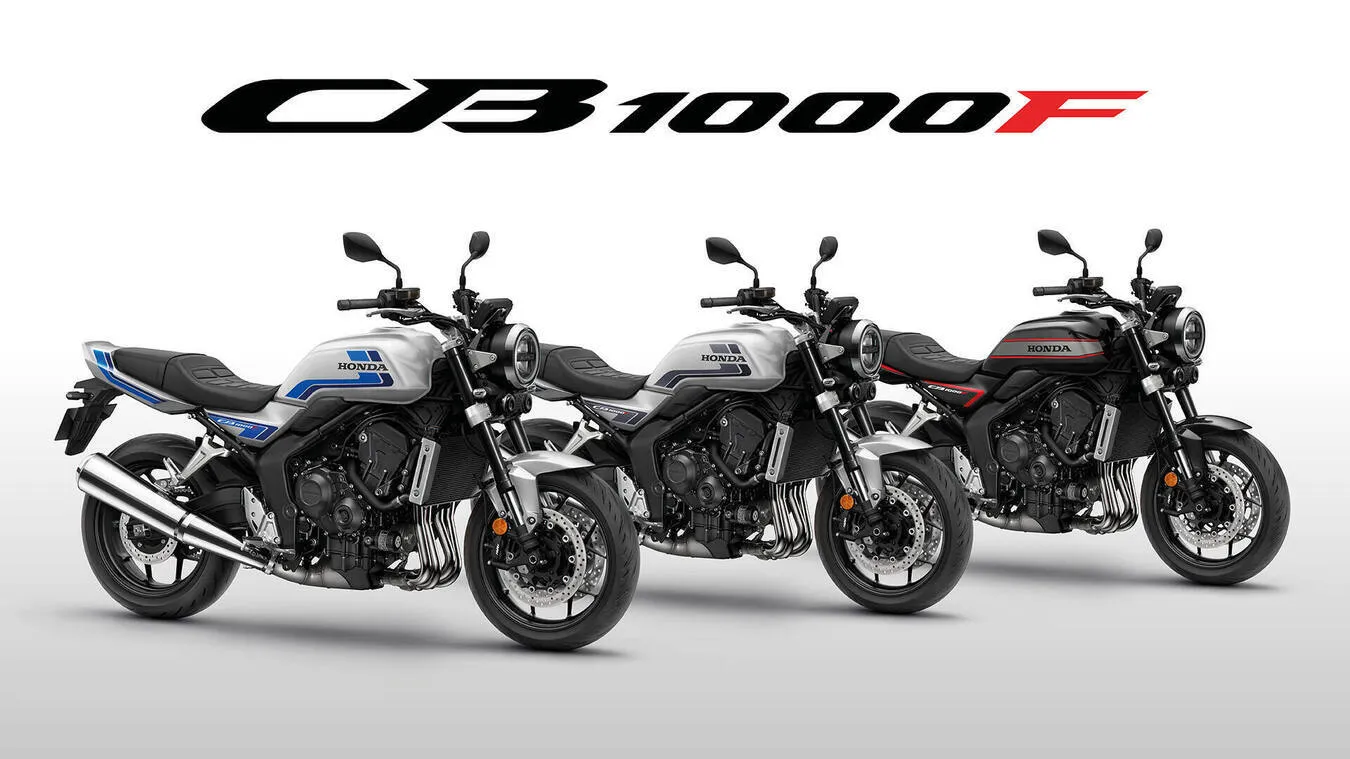
Beyond the bike: Young heart, old spirit - The story behind the CB1000F
POSTED: 15/10/2026
- Inspired by the late 1970’s and 1980’s, the CB1000F channels some of the most iconic Honda’s from both the road and track
- Development of the new bike overseen by Takayuki Haramoto, former Large Project Leader of the CB750 Hornet and XL750 Transalp models
- CB1000F packs modern performance in a retro outfit
When Freddie Spencer and Honda entered the AMA Superbike Championship in 1981 with the CB750, Takayuki Haramoto was just a child. Today, Haramoto-San is a Large Project Leader at Honda, who oversaw development of the CB1000F; a retro-rich naked that draws on ‘Fast Freddie’s’ iconic race bike.
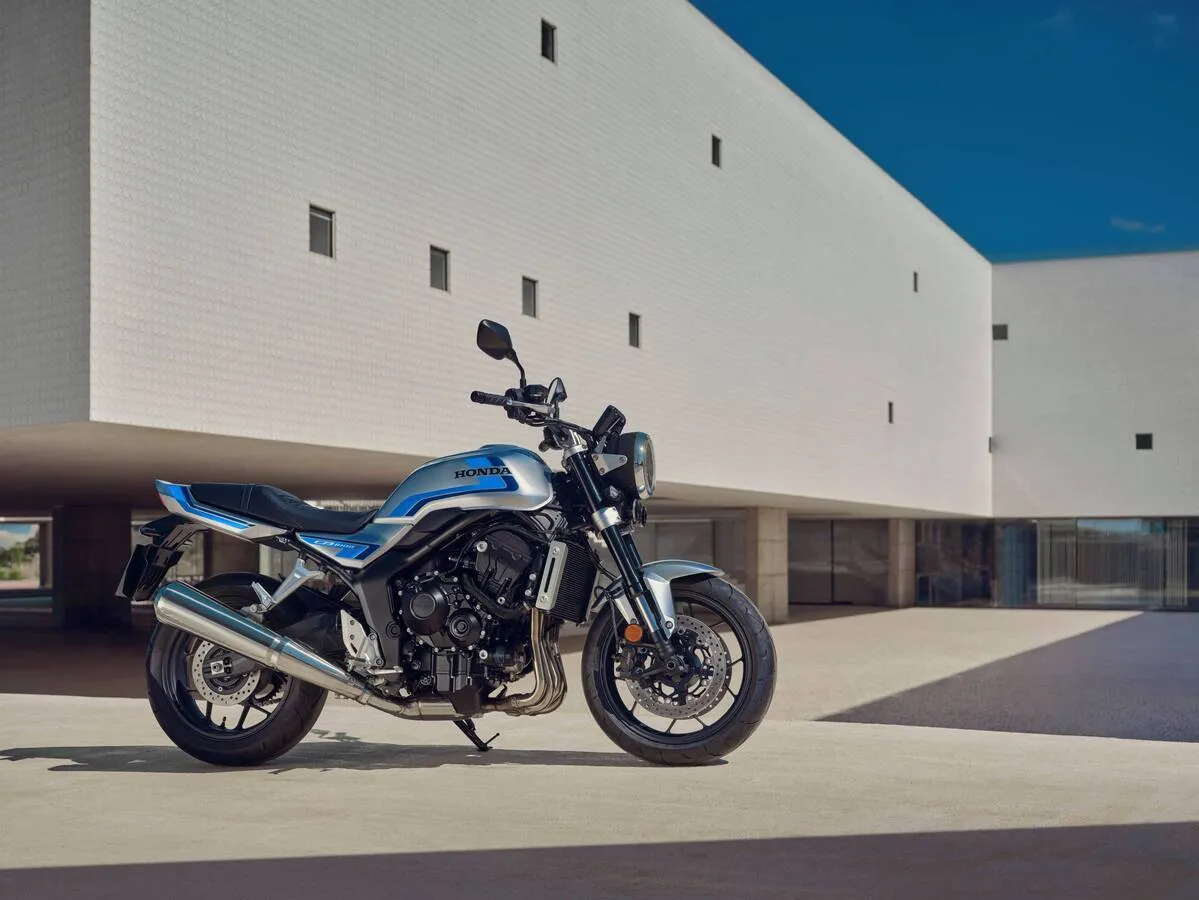
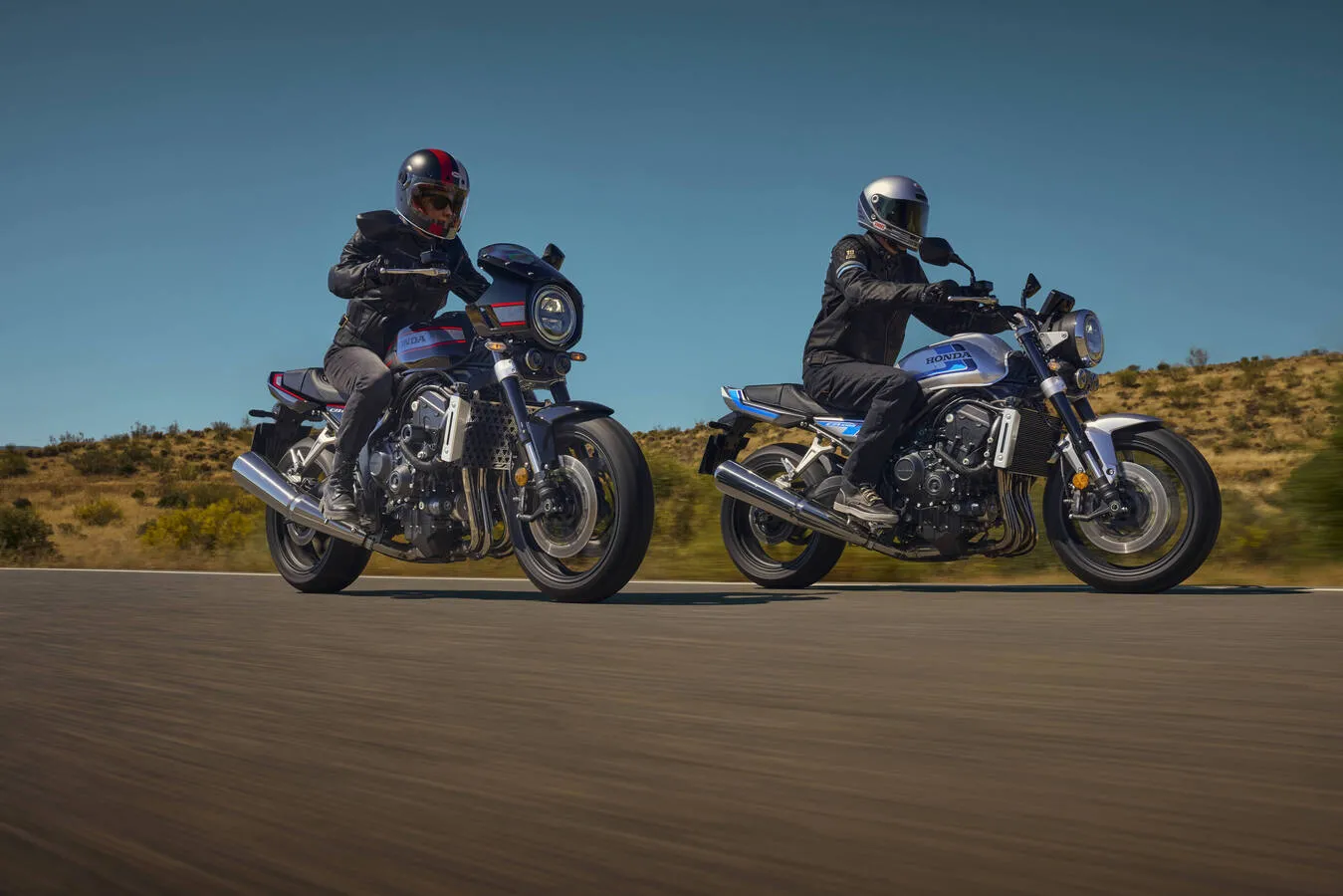
Whilst the CB1000F oozes eighties style, it isn't a retro pastiche. Now arriving in Honda dealerships across Europe, it packs a thoroughly contemporary punch thanks to its Fireblade-derived engine, modern frame, suspension components and the latest technologies, all of which posed key challenges for the team.
“With the CB1000F, directly replicating the CB750/900F was not the primary goal,” Haramoto San explains. “We developed the CB1000F as Japan's basic, standard naked bike; versatile and dual-purpose, suitable for any occasion. When considering a future CB, and specifically the ideal form for a basic, standard roadster and naked bike in Japan, we drew upon the F's design motifs”.
The F’s motifs are pure Bol d’Or style. Iconic in their own right, and named after the FIM 24-hour endurance race of the same name, the CB’s of the 70’s and 80’s offered riders a café racer style bike built around a powerful engine with true motorsport heritage.
“The CB750/ 900F’s are, of course, captivating. Particularly their sleek, dynamic style, which treats the entire body from fuel tank to tail cowl as one integrated form, represents a turning point in motorcycle design,” explains Haramoto-San. “They remain distinctive and appealing even today. The colour schemes are also distinctive and splendid. Furthermore, I find it appealing that it was a Super Sport model incorporating technology from the endurance racer RCB1000 into a production machine.”
The effort to reinterpret the CB750F and CB900F began with a simple but ambitious question: How do you bring the appeal of these machines into 2025 without losing what made them iconic?
“The starting point was how to translate that timeless, universal appeal – such as the simple forms and clean surfaces – into the modern era,” Haramoto-San explains. As a result, the team approached the CB1000F with the same mindset, starting as a single, continuous form, treating everything from the fuel tank to the tail cowl as one integrated line, just as the originals had done with such confidence.
Balancing heritage with innovation required stepping back from nostalgia. “Before the ‘F’, we considered what the CB should be going forward, envisioning the ideal form for a basic roadster,” Haramoto-San says. The goal was to give the motorcycle ‘the dignified presence befitting of a big bike’ while maintaining the ease of handling that has always defined the CB lineage.
This resulted in a design built around contrast: “A powerful and compact front end” paired with “a versatile and lightweight rear end.” Onto this modern core, Haramoto-San adds, they were careful to “impart the essential appeal inherent to the ‘F’ – its simple forms and clean surfaces.”
Reviving a machine with decades of history came with its share of technical obstacles. The original late-’70s and early-’80s models differed significantly from the modern CB1000F in their engineering. “We encountered difficulties due to differing vehicle components between the 1979 and 1980s models,” Haramoto-San recalls.
The early bikes used a double cradle frame, a horizontal intake, and minimal electrical equipment, while the contemporary platform relies on a diamond frame, down-draft intake, and extensive electronics. “The differing frame structures proved particularly challenging when shaping the iconic fuel tank,” Haramoto-San notes, keen to highlight that even the most outwardly simple, and recognizable details had to be rebuilt and reengineered from the inside out.
In realising the CB1000F, Haramoto-San’s journey has almost come full circle. His personal connection to motorcycles began long before he entered the industry. “My initial fascination came from riding my father’s Monkey bike,” he says, a memory delivered with clear affection. His interest deepened as he read the manga Baribari Densetsu, where the protagonist famously begins on a CB750F, and soon he was exploring mountain passes himself.
Several turning points shaped his career trajectory. “As an LPL, developing the 23YM CB750 Hornet and Transalp were significant milestones,” he says, and he speaks with particular respect about Masatoshi Sato, LPL for those same models and the CBR1000RR Fireblade. “I learned a great deal from Mr Masatoshi Sato… both as a designer and as an LPL.”
Unlike many in his position, Haramoto-San does not point to a roster of designers or brands from his formative years. “As I come from an engineering (design) background rather than being a designer, no particular designers or brands spring to mind,” he admits. His tastes and influences come from his own passions and hobbies, taking influence from traditional Fender instruments like Stratocasters and Jazz Basses, and in the world of vehicles he has long admired the machines from the 1988 animated film, Akira. “Which is why I ride an NM4,” he adds with a smile.
Outside the workshop, Haramoto-San’s interests remain rooted in motion, sound, and exploration. “I enjoy leisurely motorcycle rides, playing guitar, and tinkering with modular synthesizers,” he says, noting that none of these are especially surprising but all of them keep him connected to the things he loves.
When asked which motorcycle from any era he would most like to ride, he answers without hesitation: “I’d love to experience the atmosphere and feel of riding a 1970s Z1/ Z2 or CB750/ 900F during their competitive heyday.” Riding one today, he says, would simply feel like riding an old machine. What he wants is not just the bike, but also the era and energy that once surrounded it. Much like the CB1000F: A machine that embodies much more than just a nameplate revival.
21st Moto Ltd is a trading style of 21st Moto Ltd (FCA no. 654813) who is acting as a credit broker and not a lender.
Please note that whilst we endeavour to ensure that our prices and information are 100% accurate, we reserve the right to amend the quoted details if they are incorrect.
✝Please note that there is an additional £99.00 preparation fee payable on the purchase of all new and used motorcycles.
